

Porta Garibaldi, formerly called Porta Ferdinandea, is an 18th-century triumphal arch at the end of Via Garibaldi in Catania. Its contrasting stonework and symbolic details mark a historic western entrance to the city. From Miramare Hotel, it is about 13 minutes by car; the hotel offers rooms in Catania.
- Location: Piazza Palestro, at the end of Via Garibaldi.
- What to see: Alternating lava and Syracusan stone, an upper clock and sculpted symbols.
- Visit basics: It is an outdoor urban monument; check the official site before you go for current practical details.
The story and architecture of Porta Garibaldi
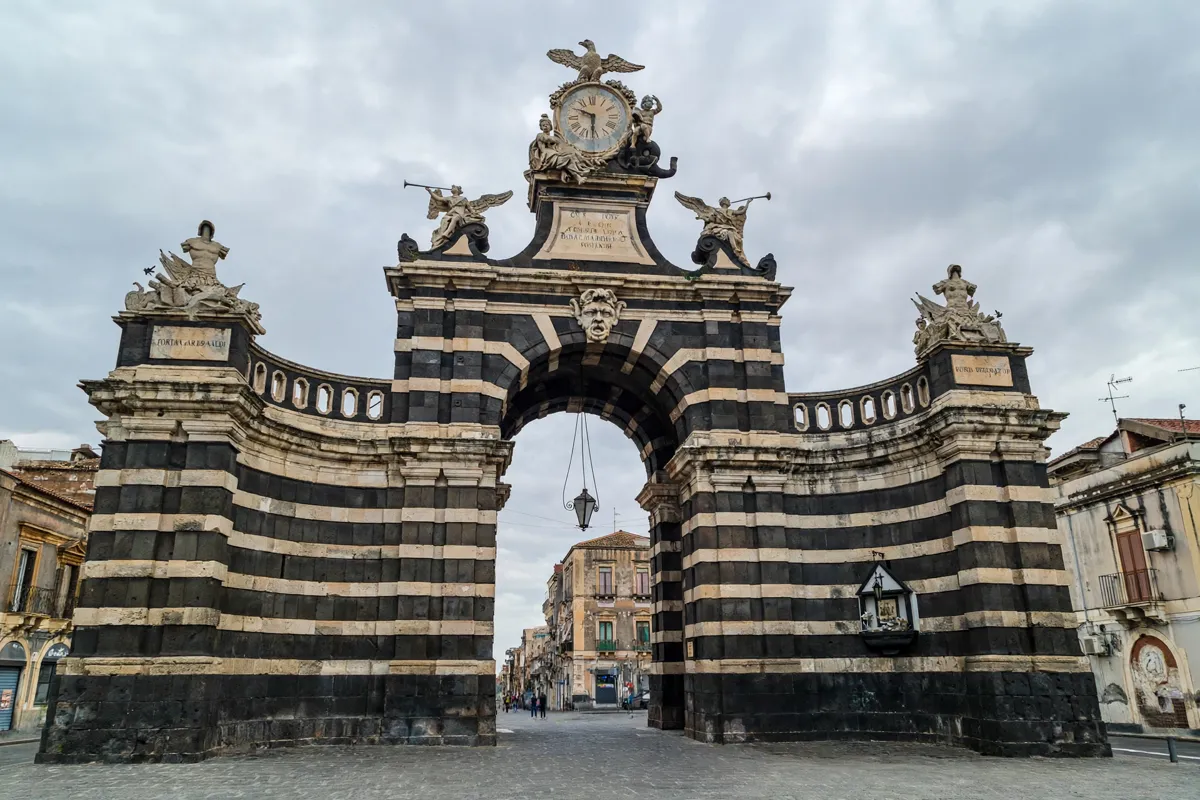
Porta Garibaldi was built in 1768 as a triumphal arch for the marriage of King Ferdinand IV of Naples and Maria Carolina of Austria. The City of Catania’s cultural-tourism guide records its earlier name, Porta del Fortino Nuova, and its later renaming as Porta Ferdinandea in the king’s honour. It took the name Garibaldi after 1860.
Designed by Stefano Ittar and Francesco Battaglia, the arch combines black lava stone with white Syracusan stone. Its upper clock is framed by an eagle and Catania’s elephant symbol; a marble bust of the king originally occupied that position. Angels with trumpets, military trophies and the mottos “Litteris armatur” and “Armis decoratur” add further detail.
On the east side, a phoenix rises from flames above the inscription “Melior de cinere surgo.” The imagery refers to the 1669 lava eruption, which buried the western part of Catania, and the idea of the city rising again from the ashes.
Where can you find the city gate?
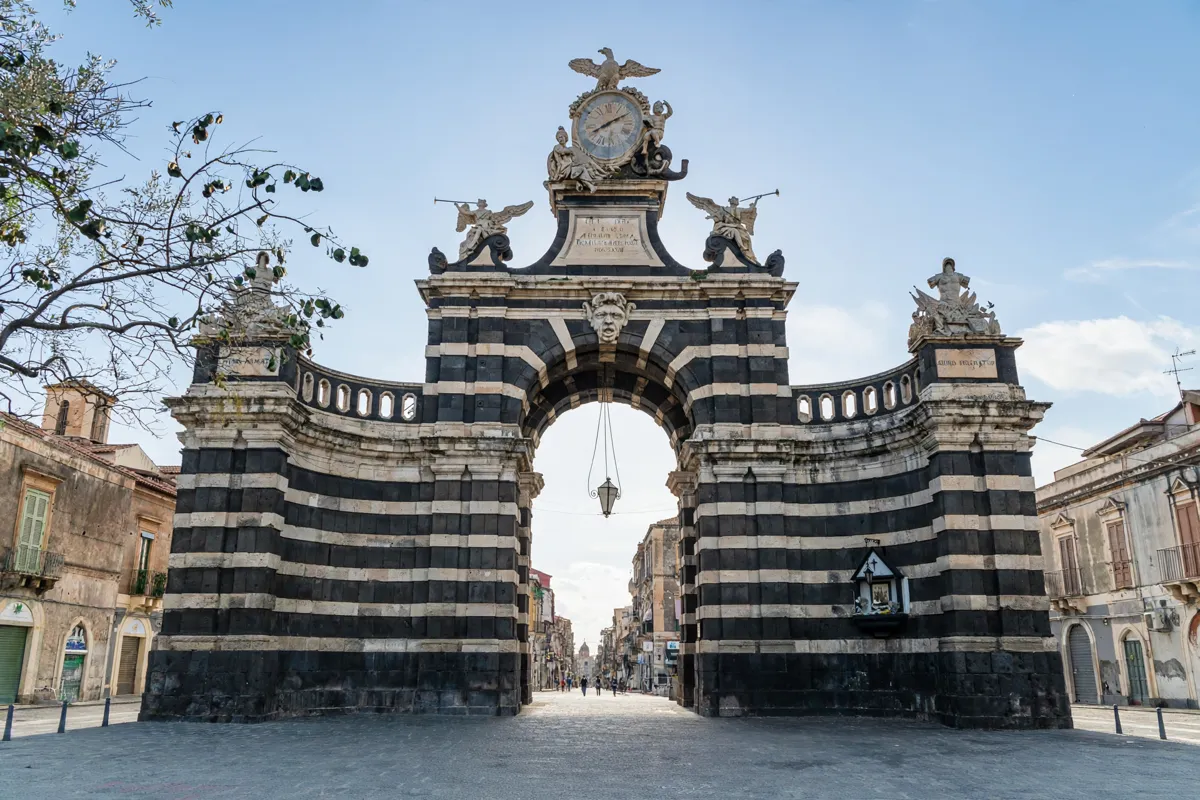
The arch stands in Piazza Palestro, at the western end of Via Garibaldi. It forms the endpoint of the street axis leading from the Cathedral of Saint Agatha. The City of Catania describes the monument as a monumental western entrance and the beginning of the road toward Palermo.
The complex was planned around two squares: a smaller inner square, now Piazza Crocifisso Maiorana, and a larger outer square, now Piazza Palestro. The gate is also known locally as “u furtinu,” though the city guide notes that the name properly refers to another gate in Via Sacchero.
How do you get to Porta Garibaldi?
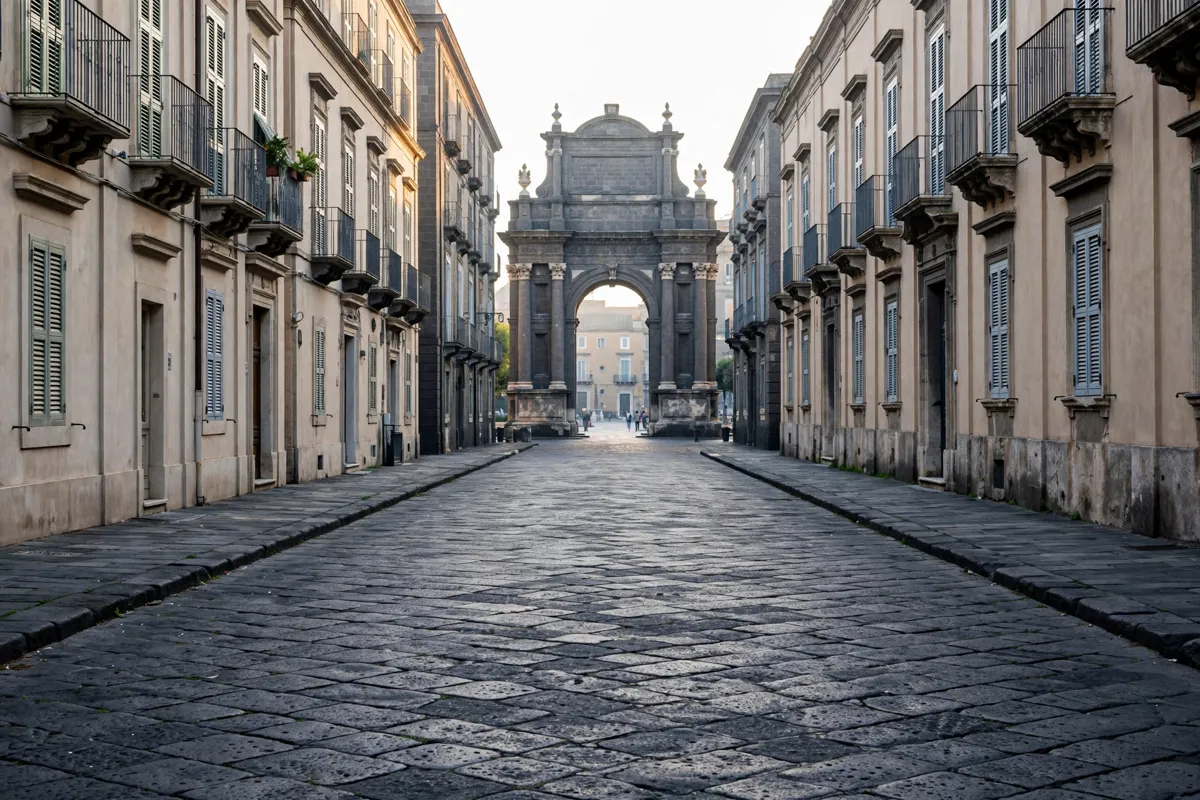
Porta Garibaldi is an outdoor monument in the city, at Via Garibaldi 337–373. You can approach it along Via Garibaldi toward Piazza Palestro, with the arch marking the street’s end.
AMTS serves Piazza Palestro with bus routes 601L and 601, both running between Parcheggio Nesima and the square. Route 601 also serves San Giorgio and Monte Po. Timetables vary by weekday and holiday, so check AMTS’s official site before travelling.
What can you combine with a visit?
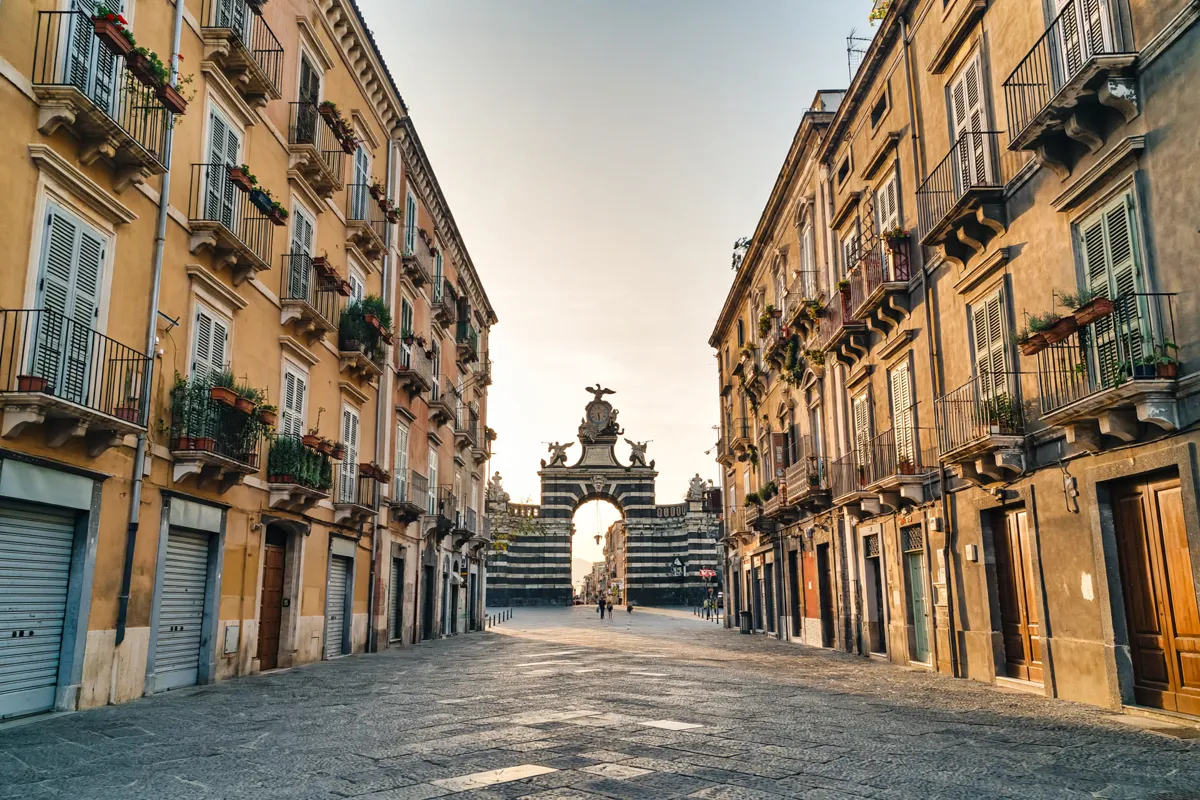
Use the arch and its two adjoining squares as a compact stop, then follow Via Garibaldi toward the city-centre axis ending at the Cathedral of Saint Agatha. For a longer route through historic streets, the one-day walk through Catania’s historic centre offers a broader city-centre itinerary.
FAQs
Is Porta Garibaldi free to visit?
It is an outdoor urban monument. The city sources cited describe the arch but do not give an admission fee or visitor opening hours, so check the official site before you go.
Why was Porta Garibaldi built?
The arch was built in 1768 to celebrate the marriage of King Ferdinand IV and Maria Carolina of Austria. It was first called Porta del Fortino Nuova, then Porta Ferdinandea.
What is the phoenix on the arch associated with?
The phoenix and the inscription “Melior de cinere surgo” refer to Catania’s renewal after the 1669 lava eruption, which buried the city’s western part.